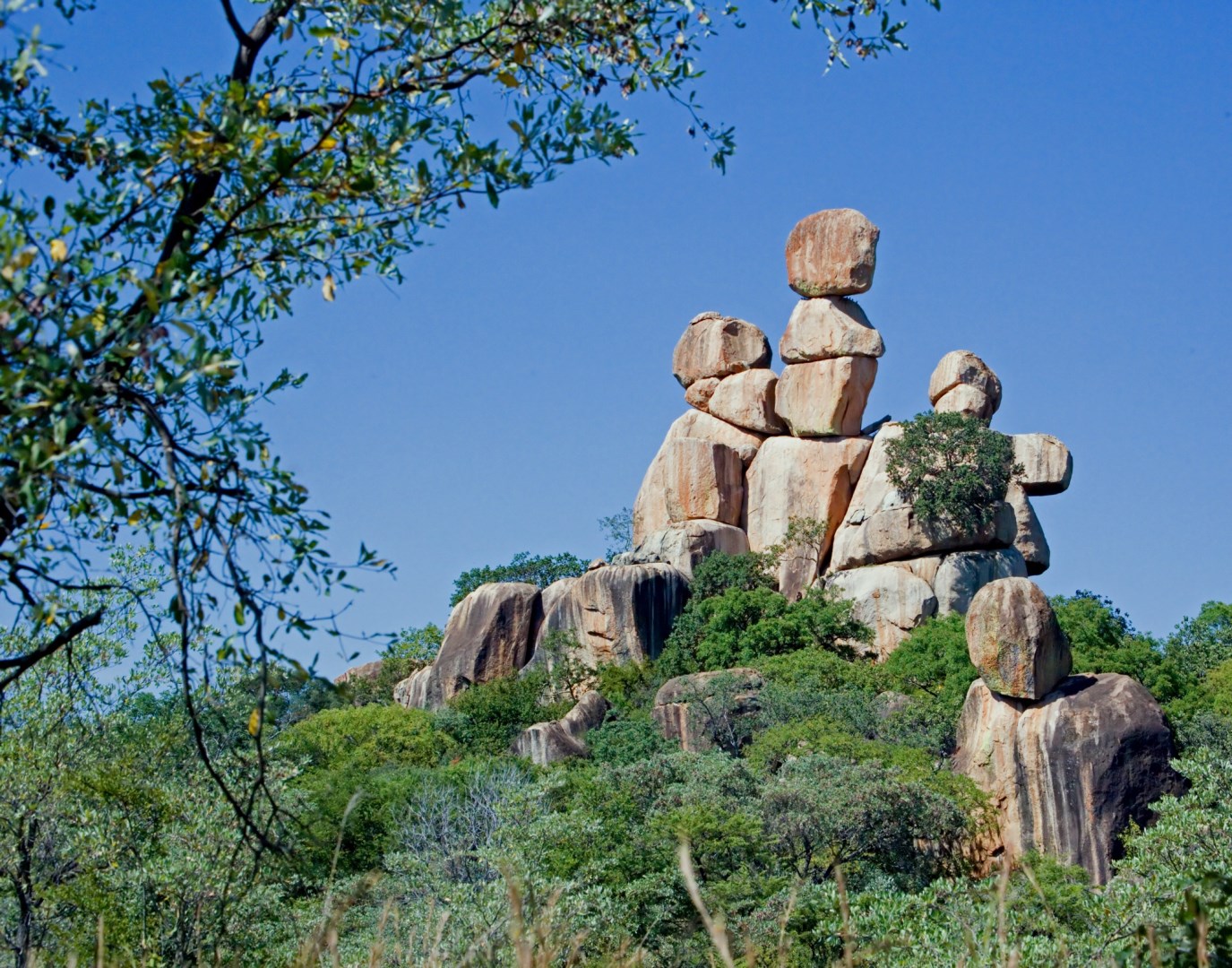
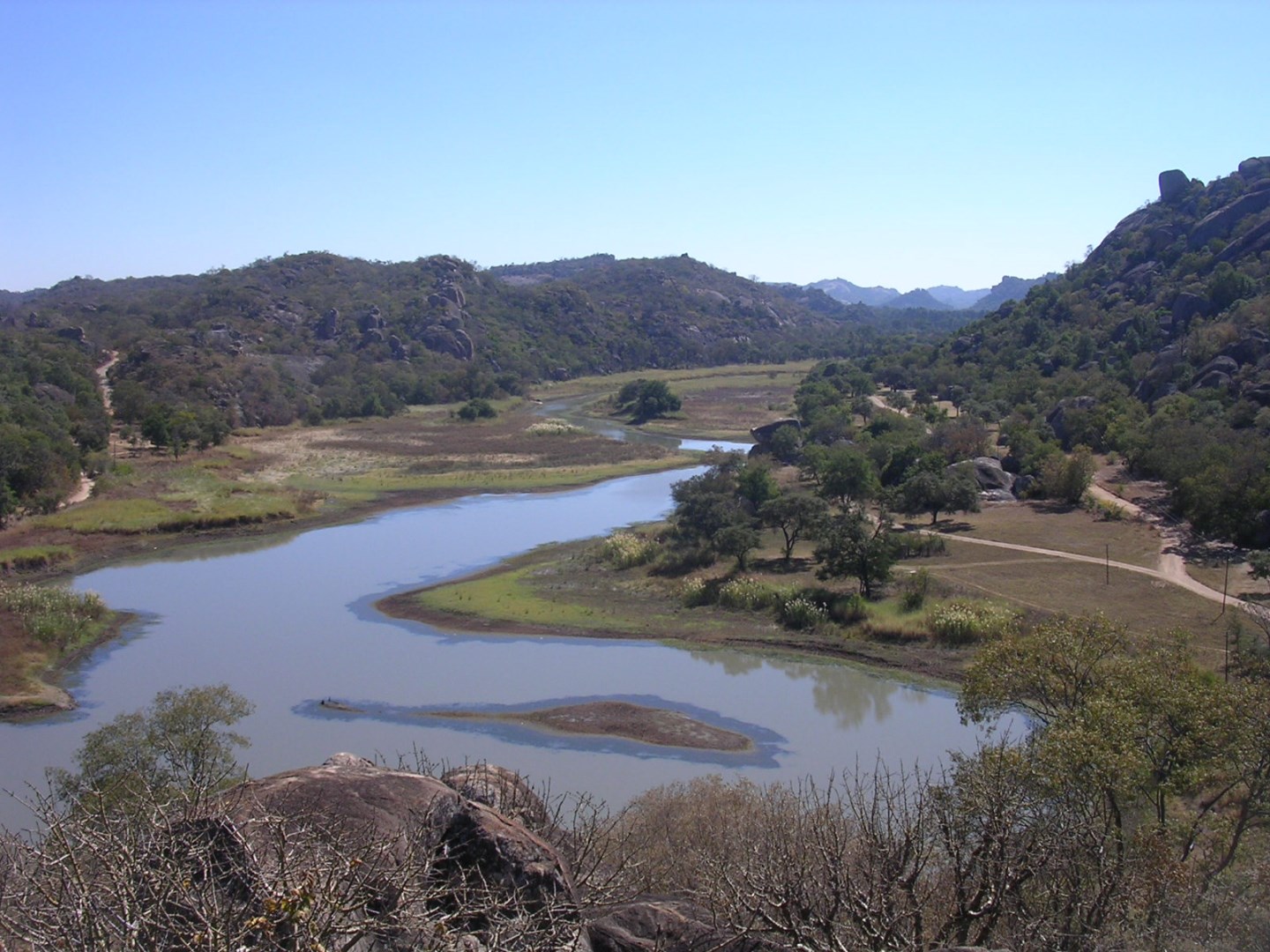
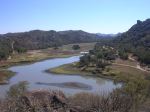
Matobo Hills is a distinctive granite landscape in southwestern Zimbabwe, about 35 kilometers south of Bulawayo. Rounded domes, balancing boulders, rocky ridges, and wooded valleys form a dense group of hills rising above the surrounding savanna. The landscape is part of a large cultural heritage area that includes Matobo National Park and neighboring communal and privately managed land. The unusual rock formations were shaped by long-term weathering of granite and have influenced both the ecology and human use of the region. UNESCO recognizes the Matobo Hills as a World Heritage cultural landscape.
The hills have deep cultural significance for communities in the region, particularly through sacred sites and traditions associated with the Mwari religion. Natural rock formations, caves, pools, and other features remain connected with ceremonies and spiritual practices. The area also contains an exceptional collection of prehistoric rock paintings, many found beneath large granite shelters. These images depict animals, people, and scenes associated with earlier hunter-gatherer societies. The continuing use of sacred places alongside archaeological evidence gives Matobo an unusual connection between living cultural traditions and a landscape that has been occupied by people for many thousands of years.
Matobo National Park protects part of the hills and provides habitat for black and white rhinoceros, leopard, zebra, giraffe, wildebeest, impala, sable antelope, and other wildlife. The park is also known for its high concentration of black eagles. Visitors can explore the landscape through guided walks, game drives, and visits to rock-art sites such as Nswatugi and Pomongwe caves. World's View, a prominent hilltop location, provides wide views across the granite formations. The area’s mixture of rocky terrain, grassland, woodland, and sheltered valleys creates a range of habitats within a relatively compact landscape.
Food associated with the communities around Matobo reflects the wider cuisine of southern Zimbabwe, with maize-based sadza commonly served with vegetables, beans, meat, or locally caught fish. Traditional knowledge of wild plants and natural resources also forms part of the cultural landscape. The granite hills themselves are the defining feature, with some boulders appearing to balance naturally on narrow bases and others forming sheltered caves used for rock art and ceremonies. Matobo is also notable for the way wildlife conservation, archaeological sites, sacred places, and contemporary community life occupy the same landscape, making its natural and cultural features closely connected.
Other Popular Destinations in Zimbabwe